September 18, 2026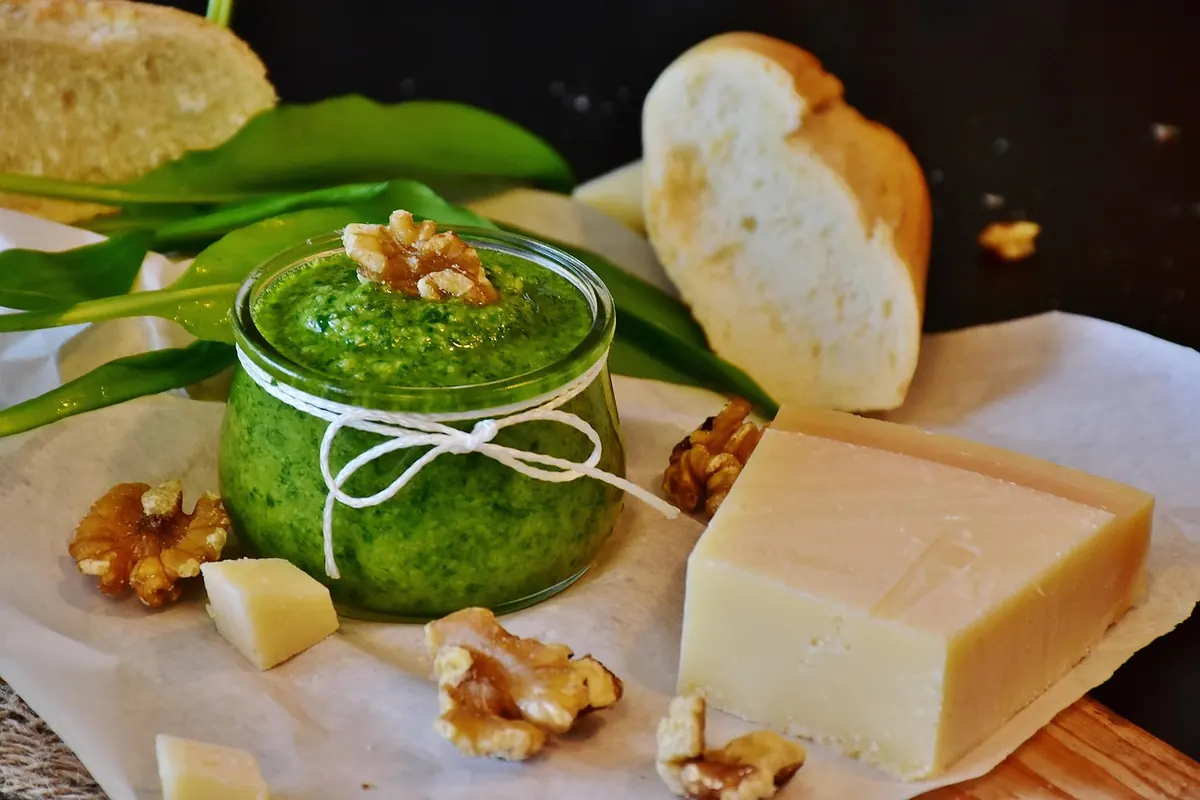
There's a week in early spring when a wood floor turns green almost overnight, and if you're in the right place the smell reaches you before your eyes adjust: garlic, sharp and green, rising out of last year's leaf litter. Wild garlic — ramsons, if you prefer the old name — is one of the most rewarding things to forage in Britain. It's generous, it returns to the same patches every year, and a decent bag of leaves will keep you in pesto and soup for weeks.
It's also the plant that catches out more beginners than any other, because two of its closest lookalikes are genuinely dangerous. The reassuring part is that telling them apart is a learnable skill. Once you know what to check, it takes about ten seconds per plant.
What Wild Garlic Actually Looks Like
Start with the leaves. They're broad, soft and lance-shaped, tapering to a point, usually a slightly glossy mid-green with a paler underside. Run a thumb along one and you'll feel the veins running lengthwise from base to tip rather than branching out from a central rib. A healthy patch grows as a dense carpet in damp shade, often under beech, and the leaves stand tall enough to stroke your ankles as you walk.
The arrangement matters as much as the shape. Each plant sends up a single stem carrying two leaves — occasionally three — both emerging from the same point low down. If you're looking at leaves rising separately from the ground at different angles, slow down and check again.
From April, white flowers appear: six narrow petals, star-shaped, held in a loose cluster on a stem of its own above the leaves. They're edible and pretty in a salad. Later, the seed heads turn into small green capsules that scatter black seeds when you brush past them.
The smell test, done properly
Pick one leaf, tear it across, and roll it between your thumb and forefinger. Then smell. Real wild garlic is immediate and pungent — the sort of garlic hit that lingers on your skin for the rest of the walk. If you get nothing but a vague green or faintly floral smell, leave the plant alone.
A useful rule of thumb is that British plants which genuinely reek of onion or garlic when crushed belong to the allium family, and alliums are edible. The word doing the work there is genuinely. A hint of green is not a smell test; it's a warning. And the smell is one clue among several, never the only one. Match the shape, the leaf arrangement, the habitat and the season as well.
The Lookalikes Worth Knowing
You don't need to memorise every plant in the wood. You need to know the handful that share wild garlic's taste for damp shade and can turn up at the same time of year.
Lily of the valley
This is the one to take seriously. The leaves are a similar shape and size, they grow in similar places, and the flowers are also white and appear in May. But crush a leaf and you get nothing garlicky. The flowers give it away too: bell-shaped, nodding, hanging in a one-sided row along a separate stem, rather than starry and clustered. Every part of the plant is poisonous, and swallowing it can cause serious heart problems. If you have any doubt at all, walk on.
Autumn crocus
Its leaves push up in spring in damp meadows and open woodland — broad, strappy, upright, with no garlic smell whatsoever. The flowers don't appear until autumn, crocus-like and pale lilac, long after the leaves have vanished. It's highly toxic, so it's worth knowing the leaf even if you never pick it.
Lords-and-ladies
Young shoots emerge early, just as the first garlic leaves do. The leaves are arrow-shaped with distinct backward-pointing lobes at the base, often blotched with black or purple. No garlic smell, and the sap can irritate skin and mouth. It's poisonous. Early in the season, when everything is small and green, this is the most likely mix-up.
Bluebells
Less dangerous, but easy to confuse in a hurry. Bluebell leaves are narrower, floppier and often have a keel running along the underside. A bluebell patch smells of green and soil, not garlic. Leave them be anyway — they're slow to spread and deserve better than being trampled for a salad.
Seasonal Clues Through the Woodland Year
Wild garlic keeps a tight calendar, and knowing it saves you from picking at the wrong moment.
- Late February to March: the first shoots appear. They're tender, but they're also the point when lookalikes are most similar. Check every plant individually.
- April: peak season. Leaves are at their best — soft, fragrant and easy to cut. This is when to fill a bag.
- Late April to June: the flowers open. The smell across a whole wood is extraordinary, but the leaves turn coarser and the flavour gets harsher as the plant puts its energy into seed.
- July onwards: leaves yellow, flop and disappear. The wood looks empty again. There's nothing worth picking until next spring.
If you can, visit a promising patch in flower first. Note where it is, see the whole plant in bloom, and come back the following year knowing exactly what you're cutting.
Where to Pick, and Where to Leave Alone
Damp shade is the key: stream banks, hedge bottoms, the edges of old lanes, churchyards and the floor of established woods. The further west and north you go, the more of it there is.
Be fussy about the site. Leave roadside verges alone, where spray and exhaust settle on the leaves, and skip field edges that may catch herbicide drift. Avoid the busy strip beside a footpath where every dog in the parish walks. Nature reserves often ban foraging outright, and sites with special protection need to be left untouched — check signs, byelaws and any site rules before you start.
On private land, ask first. Across most of the UK it's an offence to uproot a wild plant without the landowner's permission, which is one more good reason to pick leaves and leave the bulbs where they are. If you're unsure about a site, ask the landowner or the site manager rather than guessing.
Safe Picking Habits: A Checklist
- Confirm the smell on three or four separate plants across the patch, not just the first one you meet.
- Look at the base of each plant: two leaves from one stem, not several stems from the ground.
- Cut leaves with scissors or pinch them off cleanly, well above the bulb.
- Take one or two leaves per plant and move along, rather than stripping one clump bare.
- Leave yellowed, torn or slug-chewed leaves behind.
- Carry your haul in a cloth bag or open basket. A sealed plastic bag turns it to slime within an hour.
- Wash everything when you get home, even if it looks clean.
- Use it the same day, or blanch and freeze it, or blend it into pesto or garlic butter.
- Never add a leaf you're unsure about to a bag of good ones.
If You Think You've Picked the Wrong Thing
Empty the bag somewhere animals won't get to it, and wash your hands. If someone has actually eaten a plant you now suspect, don't wait to see what happens. Contact NHS 111 for advice, or 999 if the person is unwell, and keep a sample or a clear photograph of the plant so a medical professional can identify it. This is general guidance only — for anything involving a suspected poisoning, get proper medical advice straight away and don't rely on a foraging book or a website.
Getting Started This Spring
You don't need a course or a mentor to begin,
Photo: RitaE / Pixabay